Practical
What to wear to a tea ceremony
Shoes off, knees bent, jewellery away: what to wear to a tea ceremony in a Kyoto temple, including socks, kimono rental and rainy-day options.
Book the temple tea ceremony ↗Quick answer
Wear modest, comfortable clothes you can sit low in, and socks, because shoes come off at the entrance to the Grand Tearoom. Japan-guide.com advises removing jewellery that may damage the tea equipment and avoiding strong perfume. A kimono can be rented separately, but it is optional, and the temple grounds can be wet, so bring something for rain.
Start with the floor
What you wear at this ceremony is mostly decided by the floor. Shoes come off at the door of the Grand Tearoom before you take your seat, and unless you ask for a seat or stool the traditional position is on the floor. Wikipedia says tatami are traditionally used in tearooms and that guests shuffle on them, which is why you should choose clothes that let you bend your knees and sit low without strain. Skirts that ride up and very tight trousers are the usual problems; loose trousers or a long skirt are easier.
Socks and shoes
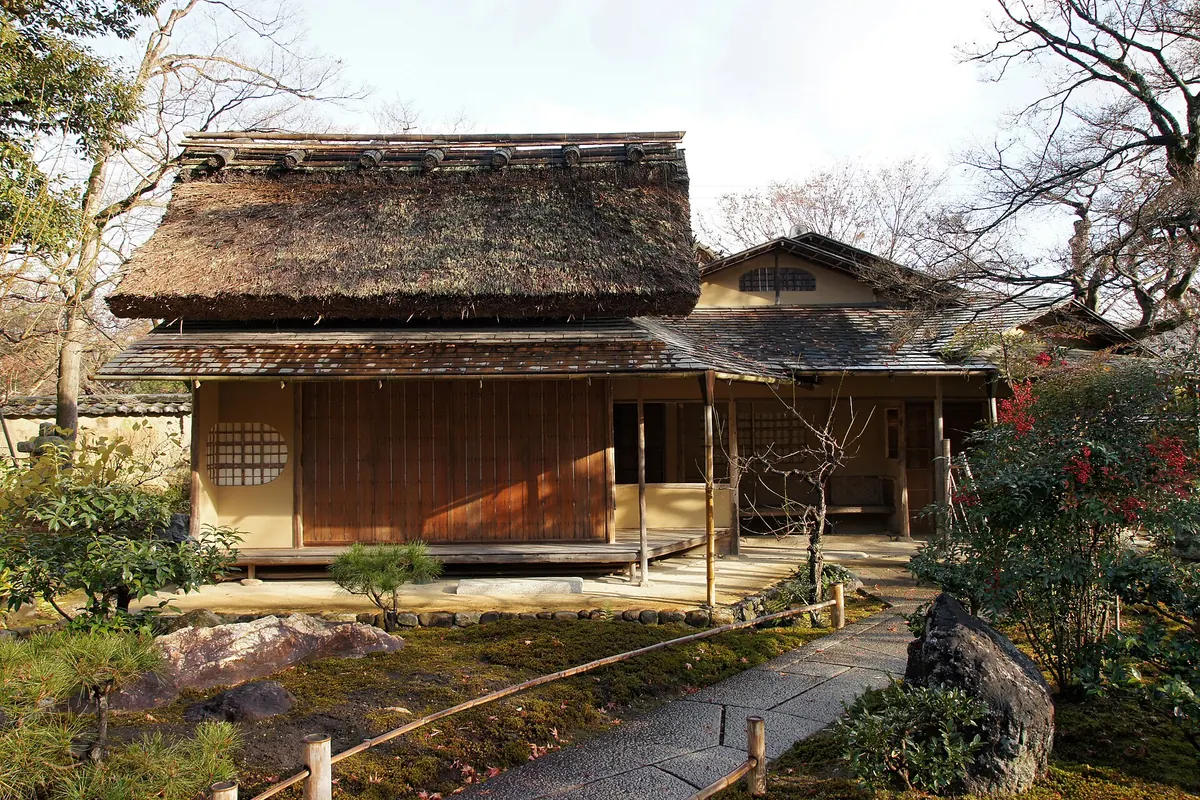
Because shoes come off, socks matter. Wikipedia says guests in a formal gathering put on fresh tabi, the split-toe socks worn with kimono, in the waiting room. You do not need tabi for this workshop, but wear whole, clean socks, and slip-on shoes make the entrance easier. A pair with no holes or worn heels is the sensible choice, since everyone in the group will see your feet when you sit.
What to leave off
Japan-guide.com advises wearing modest clothes, avoiding gaudy fashion and fragrance that distract from the tea, and removing jewellery that may damage the tea equipment. The same page says the garden of a traditional tea venue avoids flowers with gaudy colours or deep scents, so strong perfume would clash with the setting. Take rings and bracelets off before you go in.
Should you wear a kimono?
A kimono can be rented separately, according to the booking page, and several reviewers rented kimonos in advance. One says the Tea Master was pleased. It is an extra to arrange, not a requirement, and the ceremony does not depend on it. Wikipedia notes that the kimono's restricted movement affects how people walk and sit in the tearoom, so ask the rental shop how to sit in it. If you choose to wear one, allow plenty of time to be dressed and get to the temple.
Sitting and clothes
Wikipedia notes that sitting seiza for long periods is associated with knee problems and that stools are sometimes provided for the elderly or injured. At Jōtoku-ji seats and stools can be provided for anyone not comfortable on the floor. Clothes that make a stool easier are the same ones that make the floor easier: loose at the knee and the waist, with no pressure on the lap. Layers help if the room is cool. Take a light jacket you can slip off.
Rain and the temple grounds
You wait in the temple grounds before the ceremony, and the booking page says you can sit on the red benches if the weather permits. In rain you can stand under the gable of the parish shop or wait inside the Grand Tearoom. A compact umbrella and shoes that grip wet stone suit the grounds. Japan-guide.com says stones of varying shapes and sizes make up the path to a tea house, and wet stone can be slippery.
Who this isn't for
A visitor who mainly wants costume photographs will be better served by a kimono rental with its own photo session, since the kimono here is optional. Guests who cannot remove their shoes, or cannot manage three steps into the tearoom, should read the seating guide before booking. Children under 5 are not suitable, and the ceremony is best suited to guests aged 5 and over, so dress children in clothes that let them sit comfortably for a longer session.
Read next: Tea ceremony: floor, seat or stool
Frequently asked questions
Do I have to wear a kimono?
No. A kimono can be rented separately and some guests do, but it is optional. Modest, comfortable clothes you can sit in are enough.
Do I take my shoes off?
Yes. You remove your shoes at the entrance to the Grand Tearoom, so wear whole, clean socks.
Should I wear perfume or jewellery?
No. Japan-guide.com advises avoiding strong perfume and removing jewellery that may damage the tea equipment.
Sources